Taughannock Field Station
Further Observations
Before you go in search of other pairs of bees, your coworker wants to explain the behavior that you just observed.
1) In the first stage the bees are successfully foraging on flowers.

2) The bees then decide to leave the flowers in search of more pollen and nectar.

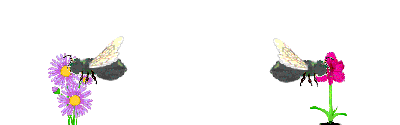
3) Eventually, the bees meet each other and exchange information.

4) The bee on the left tells the other bee about the flower that it just visited. The information that it supplies correctly identifies that flower.

5) The bee on the right then tells the other bee about the flower that it just visited. This information also correctly identifies that flower.

6) The bees finally part ways in search of the flowers of which they were just told. Because this information is correct, they find the flower and utilize some of its resources.
The drawback to this process, from the point of view of the bee supplying the information, is that if the other bee visits the flower and takes some of the pollen and nectar from it, those resources will not be available for its use in the future. So, why not “cheat” and when you meet another bee you supply that forager with false information about floral resources?